
High Oleic Soybeans Thrive in Maryland
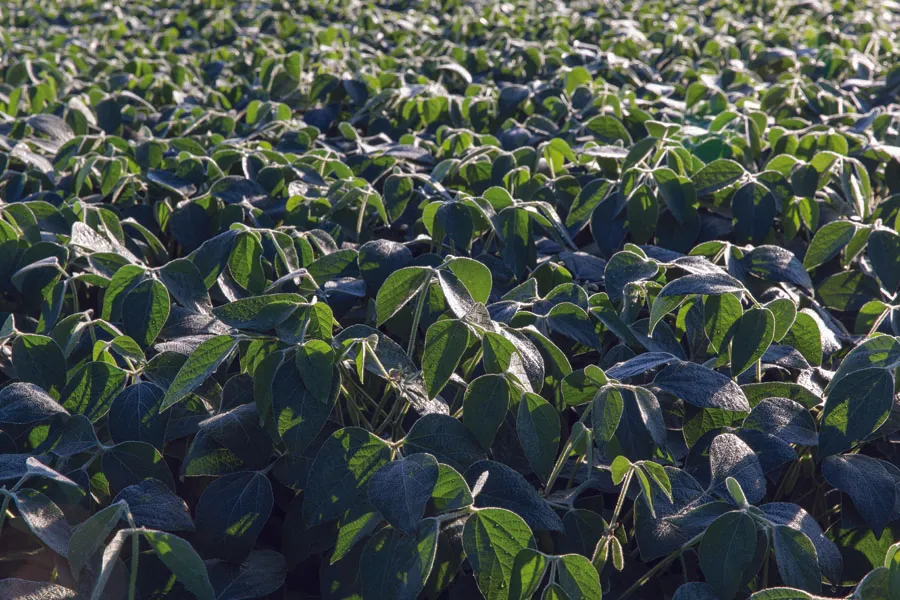 2017 marks the sixth season of high oleic soybeans. Currently grown throughout the soybean belt, these varieties allow farmers to offer end-use customers an American-grown, highly functional oil without sacrificing performance.
Beginning in limited areas of Ohio in 2011, high oleic has gradually expanded over the years to 12 states, including Maryland.
The farmers who plant high oleic soybeans see them perform competitively on their farms. Performance, coupled with added demand for enhanced soybean oil and the opportunities for premiums, have farmers returning to high oleic year after year.
“Last year’s crop was the best my high oleic soybeans have produced,” says Steve Moore, former soy checkoff farmer-leader from Sudlersville, Maryland. “They performed just as well as the top-line commodity soybeans I grew. Last year was the fourth year I’ve grown them, and I’m going to continue doing so.”
The soybean industry’s goal for high oleic soybean acreage is 18 million planted acres. If the industry reaches 18 million acres, high oleic soybeans will be the fourth-largest grain and oilseed crop in the United States, behind corn, soybeans and wheat.
High oleic soybean varieties are packed with the same agronomic traits and performance that farmers expect from their traditional soybean varieties. Farmers continue to see high oleic yield competitively in their fields year after year. Additionally, they typically do not require more work than regular soybeans.
“High oleic soybeans provide more diversity for our farm,” Moore says. “We have a grain mill close to us that accepts high oleic soybeans, so that’s an added bonus. It’s actually closer than our regular mill.”
Whether used in a fryer or as a lubricant in synthetic motor oil, the oil is more functional than other oils. And since high oleic soybeans are in demand, processors are paying a premium for them.
“There are a lot of benefits to growing high oleic soybeans,” Moore says. “Their yields are equal to the best varieties out there, and we get a 50-cent premium for them.”
A new, free tool at soyinnovation.com can show farmers how to earn more with high oleic soybeans. The calculator determines your additional revenue potential and accounts for any extra costs you might see for handling these identity-preserved varieties.
While you’re there, you can also learn more about high oleic demand, contract opportunities and growth potential.
Maryland Soybean Farmers Improve Sustainability of Crop
 (SALISBURY, MARYLAND) – June 2017 – When Maryland’s soybean farmers began planting this spring, they did so with the sustainability of the state’s natural resources as a top priority, as evidenced by a recent review of government data released by the United Soybean Board.
Thanks to the responsible use of technology and continuous improvement in management practices, Maryland’s soybean farmers have increased their productivity on less land per bushel, the report said. The United Soybean Board’s “Soy Sustainability” research gathered datasets from the U.S. Department of Agriculture (USDA), Environmental Protection Agency and U.S. Fish & Wildlife Service.
Since 2010, the report said, Maryland soybean farmers are harvesting 29 percent more bushels of soybeans, on just 11 percent more soybean acres.
Over that time, they’ve also put more of their acres into conservation, watershed and wildlife programs. With nearly a third of Maryland’s land mass in 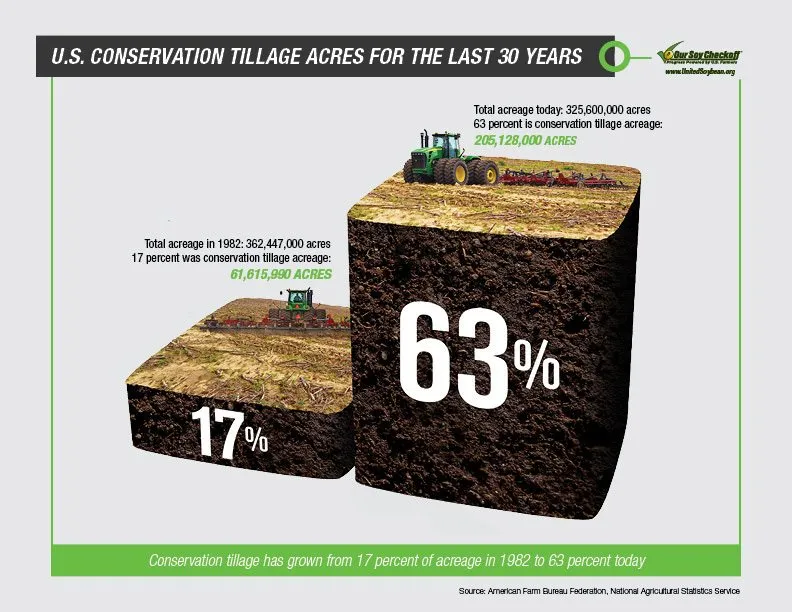 farming, and almost the entire state within the Chesapeake Bay watershed, how Maryland farmers manage their land has a huge impact on the health of the Bay.
“The responsibility for taking care of the land, water and air we utilize to produce soybeans is our livelihood and the heritage that’s been passed to us. While our farms are often bigger or look different than they did a generation or two ago, our commitment to doing what’s right by our neighbors and future generations remains the same,” says Travis Hutchinson, chairman of the Maryland Soybean Board and soybean farmer from Cordova, Md. “My family enjoys those resources the same way most people do. We drink the water, hunt the land, and fish the waterways, so we do everything we can to sustain them.”
Maryland farmers embrace their responsibility to conservation through approaches ranging from cover crops and fencing cattle out of streams to high-tech equipment like GPS and variable rate application of fertilizer. In the process, they’ve increased their sustainability, while achieving goals like improving water quality and reducing soil erosion at the same time.
In fact, Maryland farmers reduced soil erosion per acre per year by more than a ton between 2000 and 2015, for a total 21 percent reduction in erosion.
The USDA’s Natural Resource Conservation Service reflected these findings in its most recent Chesapeake Bay Progress Report: Agricultural Lands – Key to a Healthy Bay, that “Independent reports show positive trends for water quality, habitat and key aquatic species, and modeled results and monitoring stations show declines in nutrient and sediment loads to the Bay.”
American soybean farmers’ sustainability performance is increasingly important to customers who buy their products. Currently, 98 percent of U.S. soybeans are certified sustainable, according to the U.S. Soybean Sustainability Assurance Protocol (SSAP).
U.S. soybean farmers are committed to implementing new production practices to continuously improve their sustainability record. The protocol is a certified, aggregate approach to the sustainability performance of U.S. soybean production. The data used is regularly compiled by the U.S. Department of Agriculture and other sources that collect it from U.S. soybean farmers through existing government programs.
Coast to coast, American soybean farmers have adopted a number of sustainable practices they employ day after day, year after year:
- Crop Rotation – 94% of soybean acres are under continuously rotated plantings, contributing to increased biodiversity.
- Water Management – Soybean farmers use no-till farming, grass filter strips, cover crops and more to manage their most precious resource – water. These practices help slow runoff from fields, trapping and filtering sediment, nutrients, pesticides and more before they reach surface waters.
- Reduced Tillage – 70% of U.S. soybean acres use conservation tillage, including no-till.
- Pest Management – 49% of U.S. soybean farmers scout their fields weekly during the growing season.
- Nutrient Management – 46% of U.S. soybean farmers test their soil every 1-3 years.
- Precision Farming – 43% of U.S. soybean farmers used precision technology in 2006 to increase on-farm efficiency.
Maryland’s farmers produce soybeans from the Eastern Shore of the Chesapeake, up the Potomac River and to the northern edges of the Blue Ridge Mountains. The soybeans produced in Maryland provide food, feed, and a few products you probably use every day. Those include healthier soybean oils for salad dressing and deep frying, new more sustainable plastics and printing inks, and feed for the poultry and livestock produced across the state.
The Maryland Soybean Board administers soybean checkoff funds for soybean research, marketing and education programs in the state. It is funded by farmers through an assessment of one-half of one percent of the net market value of soybeans at their first point of sale. One-half of the checkoff funds stay in Maryland for programs; the other half is sent to the United Soybean Board.
In Maryland, farmers grow about a half a million acres of soybeans, producing more than 20 million bushels of beans each year. With a value of $173 million to the state’s economy, soybeans are one of Maryland’s top crops.
Farmers Advised to Scout for Kudzu Bug

(ANNAPOLIS, MARYLAND) – June 1, 2017 – Kudzu bug, an invasive insect, has been identified in nine Maryland counties and growers should be vigilant, according to the Maryland Department of Agriculture.
Kudzu bug, originally from Asia, has been found in Anne Arundel, Calvert, Carroll, Charles, Dorchester, Montgomery, Prince George’s, St. Mary’s, and Talbot counties, the department said.
Soybean growers are advised to scout for the pest, which can reduce yields, but can be controlled with appropriate pesticides.
“Kudzu bugs are invasive species that can have a significant impact on crop yields,” said Agriculture Secretary Joe Bartenfelder. “It is very important that farmers are aware of this insect and plan accordingly. Luckily, the kudzu bug is easily controlled with proper pest management planning.”
Kudzu bug is about the size of a pea and a distinctive olive green with brown speckles. It is broad and flat across the back end. Kudzu bug is a “true bugs” with piercing-sucking mouthparts. According to the department, kudzu bug typically feeds on kudzu vines and then may migrate to soybeans and other types of available beans. Excessive kudzu bug feeding can reduce soybean yields by reducing pods per plant, reducing beans per pod, and/or reducing seed size. In Maryland, the pests have mostly been collected on kudzu, however, some have been found on soybeans in Dorchester County this spring.
To report a sighting or collected sample of kudzu bugs, contact the department’s Plant Protection and Weed Management section at 410-841-5920.
More information on identification, treatment thresholds and approved insecticides may be found here: http://mdkudzubug.org/
Additional material may be found at the United Soybean Board site at http://unitedsoybean.org/article/scouting-key-to-managing-kudzu-bug
The Maryland Soybean Board administers soybean checkoff funds for soybean research, marketing and education programs in the state. It is funded by farmers through an assessment of one-half of one percent of the net market value of soybeans at their first point of sale. One-half of the checkoff funds stay in Maryland for programs; the other half is sent to the United Soybean Board.
In Maryland, farmers grow about a half a million acres of soybeans, producing more than 20 million bushels of beans each year. With a value of $173 million to the state’s economy, soybeans are one of Maryland’s top crops. For more information on the Maryland Soybean Board, visit www.mdsoy.com.
(Photo courtesy of USDA.)
Maryland farmers urged to try new approaches on Palmer Amaranth
Herbicide-resistant weed vexes Maryland, Delaware growers
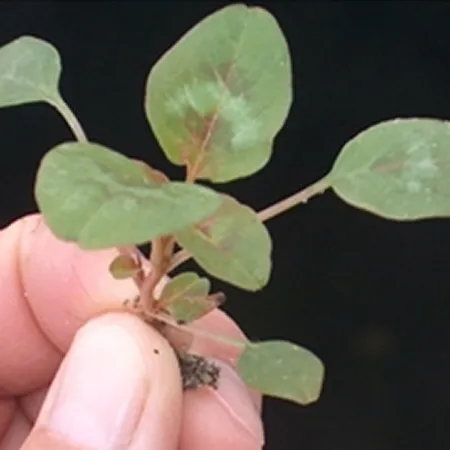 (May 19, 2017) – Farmers facing glyphosate- and ALS-resistant Palmer amaranth in their fields will need to take an integrated approach to managing the weeds this season and preventing further spread, says Ben Beale, University of Maryland Extension ag agent.
Beale, who works in Southern Maryland, says he saw fields that had extensive infestations of the herbicide-resistant weeds last year in both St. Mary’s and Charles counties. Herbicide-resistant Palmer amaranth also has been confirmed on the Eastern Shore of Maryland and in Delaware.
“Growers with Palmer amaranth should be prepared to rotate crops and chemistries,” Beale says. “They should think ahead about managing the seed bank in their fields, using cultural control methods like tillage or hand-pulling, and throughout the season and into harvest they should do everything they can to prevent the movement of seed from infested to clean fields.”
Beale evaluated 15 different regimens for controlling resistant Palmer amaranth in the summer of 2016 with funding from the Maryland Soybean Board. The board invests soybean checkoff funding to support research, marketing and educational projects.
He found that “any residual herbicide is better than no residual herbicide.” Residual products that worked well included products with Flumioxazin (Valor) including premixes of Fierce or Fierce XLT, and products with sulfentrazone (Authority) including premixes such as Broadaxe, Authority Elite, and Authority MTZ.
However, Beale says, none of the residual products provided consistently clean fields throughout the season. “This weed is a challenge,” he says. “Growers who have it need to address it now, and those who don’t need to do everything to prevent it from taking hold in their fields. That includes scouting hedgerows and insisting that combines are clean, with infested fields ideally being harvested last.”
The Maryland Soybean Board administers soybean checkoff funds for soybean research, marketing and education programs in the state. It is funded by farmers through an assessment of one-half of one percent of the net market value of soybeans at their first point of sale. One-half of the checkoff funds stay in Maryland for programs; the other half is sent to the United Soybean Board.
In Maryland, farmers grow about a half a million acres of soybeans, producing more than 20 million bushels of beans each year. With a value of $173 million to the state’s economy, soybeans are one of Maryland’s top crops. For more information on the Maryland Soybean Board, visit www.mdsoy.com.
# # #
For More Information:
Sandra Davis, Executive Director, Maryland Soybean Board
Office: 410.742.9500
sdavis26@verizon.net
Archives
No Results Found
The page you requested could not be found. Try refining your search, or use the navigation above to locate the post.