
Maryland Farmers: On Ag Day, commitment to land, water shines
By Travis Hutchison, Chairman, Maryland Soybean Board
(March 17, 2017) – As we recognize 2017 National Ag Day on March 21 and Earth Day next month, we begin another year in the fields. I’ve been thinking about the ways things have changed on our family farm from my father’s generation to mine, to protect the environment for my generation and the next.
At this time of year when I was a kid, my dad did a lot of moldboard plowing to get the ground in shape for planting. This meant the plow dug about 8 inches deep and, as it sliced through the soil, turned the ground completely over. We had been taught that this method would lead to better yields and better weed control.
Over the years, we learned the opposite — that minimum tillage and no-till could give us as good or better results. By reducing tillage, we saved on labor, reduced emissions, and, most importantly for the Bay and our future as farmers, minimized soil erosion.
And that’s not the only change. In the past, we applied most of our fertilizer at one time. Now we split up our fertilizer applications and “spoon feed” the crops. We’re not putting on more fertilizer, just applying it as the crop needs it. We use a pre-sidedress nitrate test or “PSNT,” which samples the soil for its levels of nitrogen (a key plant food) to determine how much the plant needs to finish out the crop.
Because my family believes strongly in protecting our land and water resources, we’ve followed a nutrient management plan on our farm long before the state of Maryland required all state farmers to do so. People probably don’t realize the work farmers put in on these plans – testing their soil and poultry manure for nutrients and balancing those against crop needs for each field and then maintaining the records to prove you followed the plan.
Like most Maryland farmers I know, we constantly evaluate new ideas, technology and practices to see if they work on our farm.
We plant about three-quarters of our acres in cover crops each fall, using cold-hardy plants to protect the soil from erosion, tap nutrients that may have been left behind by a previous crop, and provide organic matter to improve the soil after the cover dies. It’s not only the organic farms that use cover crops or care about improving soil. We put a lot of effort into our soil.
Building our soil means adding organic matter, so we buy up to 4,000 tons of chicken manure each year. Yes, you read that right: we BUY manure! It’s a great fertilizer and soil enhancer. Our ground has low phosphorus so we use as much as we can. We also invested in a manure shed that lets us receive manure year-round and keep it covered, so rainfall doesn’t wash away nutrients.
And, we invested in Green Seeker Technology. This is a sensor that reads the chlorophyll (or “green”) of plant leaves to determine if they need more nitrogen, then customizes the fertilizer application. That’s great for plant health and yield, and great for us as farmers.
Our family knows that by using this technology we are fertilizing the right amount at the right time for the crop. Although it’s an expensive investment, it will pay off over time, and we know it’s the right choice for our land, our business and our family.
Recently, on three of our farms, we installed ditch bioreactors. They funnel the water from the ditch into a structure with wood chips. The chips remove nitrogen from the water, allowing the water to exit the bioreactor with up to 90 percent nitrogen reduction.
These are just some of the practices that my family and I have adopted on our farmland. In total, my family has a list showing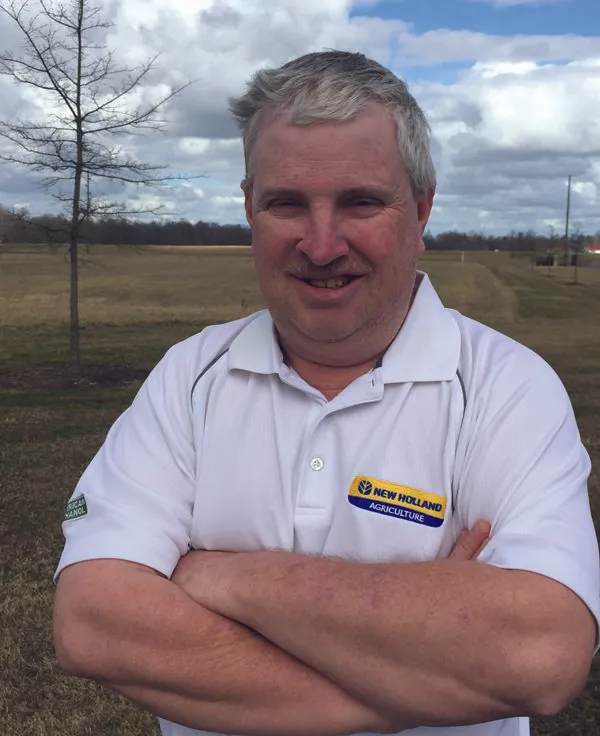 more than 40 practices that Maryland farmers have adapted to protect the environment. That’s why I’m proud to say farmers are the “original environmentalists.”
On behalf of my fellow Maryland farmers, I invite the community to learn more by visiting a few farms (you’ll find many at www.marylandsbest.net) and talking with Maryland farmers about the many ways they protect our natural resources.
Hutchison farms with his father, two uncles and cousins at Hutchison Brothers farm in Cordova, Md. He is chairman of the Maryland Soybean Board.
Maryland’s Heilman and Miller to attend 2017 Soybean Leadership College
(SALISBURY, MARYLAND) – Maryland farmers Amanda Heilman and Wes Miller will attend the 2017 Soybean Leadership College Jan. 10-12 in St. Louis, Mo.
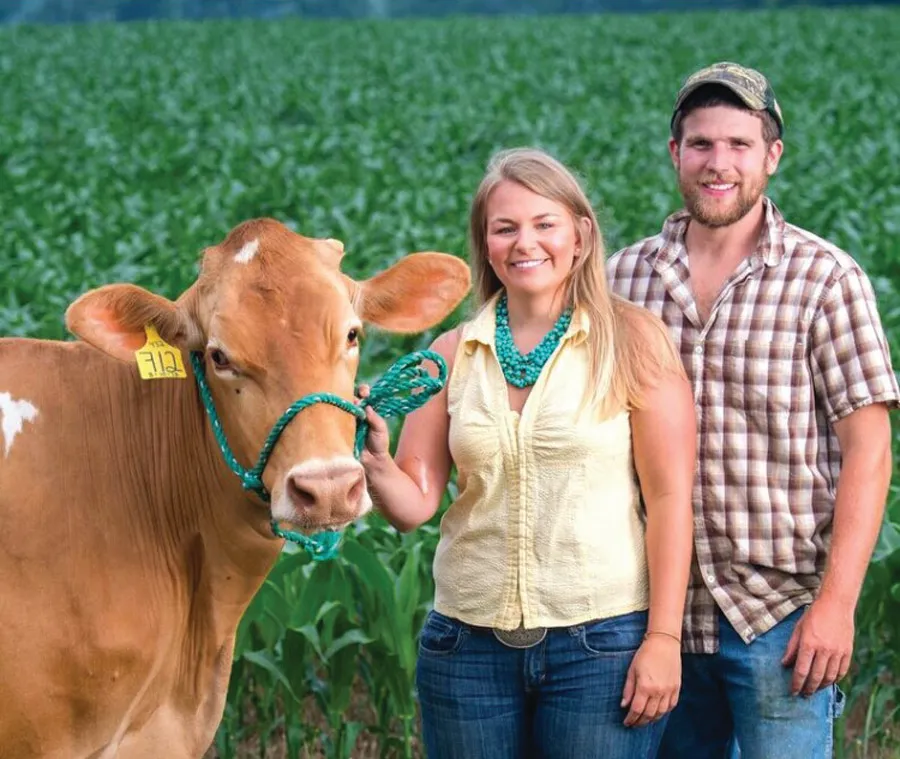 Heilman, of Worcester County, Md., is a seed sales representative for Pioneer Brand Products at Perdue Agribusiness. Miller, of Cecil County, is herdsman at Chesapeake Gold Farms, his family dairy farm which currently milks 250 cows and farms 1,500 acres.
The Maryland Soybean Board is sponsoring their trip. In Maryland, farmers grow about a half a million acres of soybeans, producing more than 20 million bushels of beans each year. With a value of $173 million to the state’s economy, soybeans are one of Maryland’s top crops.
Heilman graduated from University of Maryland College Park with a double major in Animal Science and Agricultural Science and Technology. Since college, she has worked on Delmarva as a crop consultant with focuses on nutrient management planning and conservation planning. A 2015 graduate of LEAD Maryland, Heilman serves on the board of the Worcester County Farm Bureau. She is a volunteer for CommonGround, a program that connects farm spokewomen with their non-farming peers to answer questions about farming and food production. Heilman blogs and posts under the handle “Delmarva Crop Queen.”
Miller manages the daily operations of the Chesapeake Gold Farms dairy and its employees. A 2012 graduate from the Pennsylvania State University with a bachelor’s degree in Animal Science, in 2016, Miller was awarded the first Outstanding Young Farmer of the Year award from Gov. Larry Hogan and the Maryland Department of Agriculture. Miller also is active in Farm Bureau’s Young Farmers and Ranchers program and serves on the Cecil County Farm Bureau board.
Soybean Leadership College, coordinated by the American Soybean Association, provides current and future agricultural industry leaders with training to effectively promote the soybean industry, communicate key agricultural messages and work to expand U.S. soybean market opportunities domestically and internationally.
The program also fosters networking between growers from across the country, encouraging collaboration, which in turn increases the effectiveness of soybean growers at the local, regional and national level.
The Maryland Soybean Board administers soybean checkoff funds for soybean research, marketing and education programs in the state. It is funded by farmers through an assessment of one-half of one percent of the net market value of soybeans at their first point of sale. One-half of the checkoff funds stay in Maryland for programs; the other half is sent to the United Soybean Board.
For more information on the Maryland Soybean Board, visit www.mdsoy.com.
# # #
For More Information:
Sandra Davis, Executive Director, Maryland Soybean Board
Office: 410.742.9500
sdavis26@verizon.net
William Layton Appointed to United Soybean Board
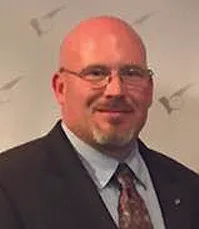 (VIENNA, MARYLAND) – Working for Toyota for eight years before coming home to farm has given William Layton a unique view on the need for volunteer leadership in the Ag Community. “A company like Toyota has a legal dept, a lobbying division, a research and development department, a HR department, and a marketing department. Farmers have none of these. That’s why I believe so strongly in volunteering with agriculture organizations like the United Soybean Board that help to fill those roles for farmers,” William says.
Having completed nine years – three three-year terms, the maximum permitted – on the Maryland Soybean Board, Layton, a Dorchester County farmer and vintner, was sworn in to his first three-year term on the United Soybean Board during the first week of December.
There, he succeeds Steve Moore of Sudlersville, in Queen Anne’s County, and joins Belinda Burrier of Union Bridge as one of two USB directors from Maryland.
In bidding farewell to his service on the state checkoff board, Layton said he was looking forward to further service on behalf of the soybean industry at the national level.
“My father gave me a strong feeling of responsibility when it came to volunteering with farm organizations.” Layton says. “He worked his entire career with Farm Bureau, American Soybean Association, Mid Atlantic Soybean Association, Maryland Soybean Board, and several others. But about 8 years ago he started stepping back from what he was doing, so that I could step forward and take my turn.”
Layton, his wife Jennifer and family own and operate Lazy Day Farms, a 1,300-acre grain farm, and Layton’s Chance Winery, a 14-acre vineyard and winery. William handles winemaking and is currently working on his seventh commercial vintage.
A graduate of the University of Maryland with a degree in business logistics, he recently completed the winemaking certificate program at University of California, Davis.
Layton has served as president of the Dorchester County Farm Bureau, president of the Chicone Ruritan Club, and as chairman of the Maryland Soybean Board. He was a member of LEAD MD Class 4. The Layton Family was inducted into the Maryland Agriculture Hall of Fame in 2011.
As the new board is sworn in, Steve Moore, now 54 years old, will complete a total of 19 years of service to the soybean industry – nine years on the Maryland board and 10 years on USB.
In the course of his USB service, he visited five countries – Egypt, Ireland and Japan, on behalf of the board’s biotech initiative, an effort to educate farmers there on using, and not fearing, genetically modified seed, and Brazil and Argentina, this nation’s biggest competitors in soybean world trade.
“I learned a great deal,” said Moore, “and I am very proud of what we managed to accomplish.”
The Maryland Soybean Board administers soybean checkoff funds for soybean research, marketing and education programs in the state. It is funded by farmers through an assessment of one-half of one percent of the net market value of soybeans at their first point of sale. One-half of the checkoff funds stay in Maryland for programs; the other half is sent to the United Soybean Board.
In Maryland, farmers grow about a half a million acres of soybeans, producing more than 20 million bushels of beans each year. With a value of $173 million to the state’s economy, soybeans are one of Maryland’s top crops. For more information on the Maryland Soybean Board, visit www.mdsoy.com.
# # #
For More Information:
Sandra Davis, Executive Director, Maryland Soybean Board
Office: 410.742.9500
sdavis26@verizon.net
Five Reasons to Be Thankful for Maryland Farmers
SALISBURY, Md. (November 21, 2016) – Nothing defines Thanksgiving as much as the turkey and all the trimmings. So it’s natural to think of the farmers who raised the feast and be thankful for the fruits of their labor.
Here are five reasons to be thankful for Maryland farmers this holiday:
- According to Feeding America, 12.7 percent of the Maryland population is food insecure. Let’s thank those farmers who are raising food to feed friends and family, and make it available at roadside stands.
- Maryland farmers have an $8.25 billion impact on the state’s economy, making agriculture the Free State’s Number One industry!
- Maryland’s farms support 45,600 jobs in the agriculture and food sector. Maybe even yours?
- Like their counterparts nationwide, Maryland’s 12,000+ farms are 98% family owned, often through generations.
- If you care about our environment and the Chesapeake Bay, there’s good news: Farms have a lower environmental impact than developed land. Actually, many of Maryland’s farmers have installed “best management practices” on their farms to enhance the environment.
“Maryland farmers ta ke a lot of pride in the work they do and how they operate their farms and care for our land,” says Travis Hutchison, a Talbot County farmer and chairman of the Maryland Soybean Board. “We are all thankful for the Maryland families who support our businesses and farmstands.”
The Maryland Soybean Board administers soybean checkoff funds for soybean research, marketing and education programs in the state. It is funded by farmers through an assessment of one-half of one percent of the net market value of soybeans at their first point of sale. One-half of the checkoff funds stay in Maryland for programs; the other half is sent to the United Soybean Board.
In Maryland, farmers grow about a half a million acres of soybeans, producing more than 20 million bushels of beans each year. With a value of $173 million to the state’s economy, soybeans are one of Maryland’s top crops. For more information on the Maryland Soybean Board, visit www.mdsoy.com.
# # #
For More Information:
Sandra Davis, Executive Director, Maryland Soybean Board
Office: 410.742.9500
sdavis26@verizon.net
Archives
No Results Found
The page you requested could not be found. Try refining your search, or use the navigation above to locate the post.