
For Maryland Farmers, Every Day is Earth Day
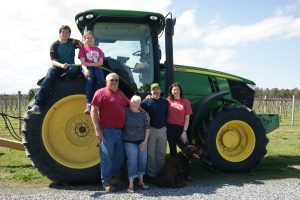
Three times a week, I go out running around a path that I made around three of my soybean fields. Not a single day goes by that I don’t think about the connection between this land and my family.
Earth Day is a day when we all think about the environment, when we look at how we take care of the land and how to leave it in better condition than we found it.
Every day is Earth Day to a farmer. Taking care of the land is my job and my passion. My land is my heritage, my inheritance, my business, my recreation, my safe haven, and my retirement.
No one poisons the well they drink from, and farmers are no exception. Good, clean, productive land is how I feed my children and will put them through college. I may have a piece of paper that says that I own the land, but I know that I am only a caretaker. The land was here long before me, cared for by many generations. I expect it will be here long after me, cared for by my children and their children.
Maryland farmers, as a group, are the most progressive and environmentally minded in the nation. This year, we once again broke the record for cover crop acres planted – one of the most effective ways to protect both our land and the Chesapeake Bay.
We’re far ahead of other milestones set for the Bay, too, including planting streamside forest and grass buffers, retiring highly erodible land, and constructing storage for animal manure, which is an important source of organic nutrients for our crops.
We’ve got soil conservation and water quality plans on half of Maryland’s tillable acres and have embraced the manure transport program, moving four times the amount of manure than the goals prescribed.
I often hear, “Sure family farmers take care of their land, but what about corporate farms?” I don’t know of a single farm that isn’t a family farm (and I know a lot of farmers). Family farms – owned by brothers, by a father and son or daughter, by a husband and wife, or by cousins – often will incorporate for legal or financial reasons. The USDA says that 97 percent of farms in the United States are family-owned operations.
Sometimes these farms are large, because farms, like every other business, have to grow to survive. You can’t go out and make a good living on 100 acres like you could in my grandfather’s day. Today it’s more like 2,000 acres or more for corn and soybean growers.
How can farms that large take care of the land adequately? Technology and innovation. Today it’s possible to do a better job with 3,000 acres than my grandfather could with 100. We no longer have to plow the land, which destroys the structure and biology of the soil and leaves it open to erosion. GPS technology allow us to treat every single acre individually.
Ask a farmer anything about his land, the littlest detail, and he’ll know it. Ask where there are problems with grasses, or pigweed, or marestail, and he’ll know. Ask where the wet spots are, or spots that get as hard as concrete in the summer. Ask where water runs off the land, and where it will pond up. A farmer knows his farm like the back of his hand. Most will tend every acre four or more times a year, planting, scouting, fertilizing, killing weeds and harvesting.
My family has owned the farm I live on for 68 years now. Three generations of Laytons have all been raised in the same house, on the same land. When I watch the sun rise over the fields each morning, I know the only thing more important to me than my land is my family.
Enjoy Earth Day, and make a pledge to see firsthand how farmers make every day Earth Day. We welcome you to visit our farm, or suggest MarylandsBest.net to locate farms near your home to visit, where you can see land and water quality efforts in action.
William H. Layton
Chairman, Maryland Soybean Board william@laytonschance.com
William Layton, his wife Jennifer and his father Joe raise soybeans, corn, wheat and grapes on a 1,300-acre farm in Dorchester County, MD. The family opened Layton’s Chance Winery in 2010.
Baltimore Parents Will Cheer Soy-Backed Synthetic Lawn
Baltimore, MD. (APRIL 05, 2016) – The fields around the Baltimore County Center for Maryland Agriculture and Farm Park aren’t the only things greening up this spring. Inside the Exhibit Barn, a soft green synthetic “lawn,” featuring a soy-based backing, has sprung up.
And that is going to make local parents happy. Why? “The old floor was dirt,” explains Bronwyn Mitchell, the farm park manager. “In addition to 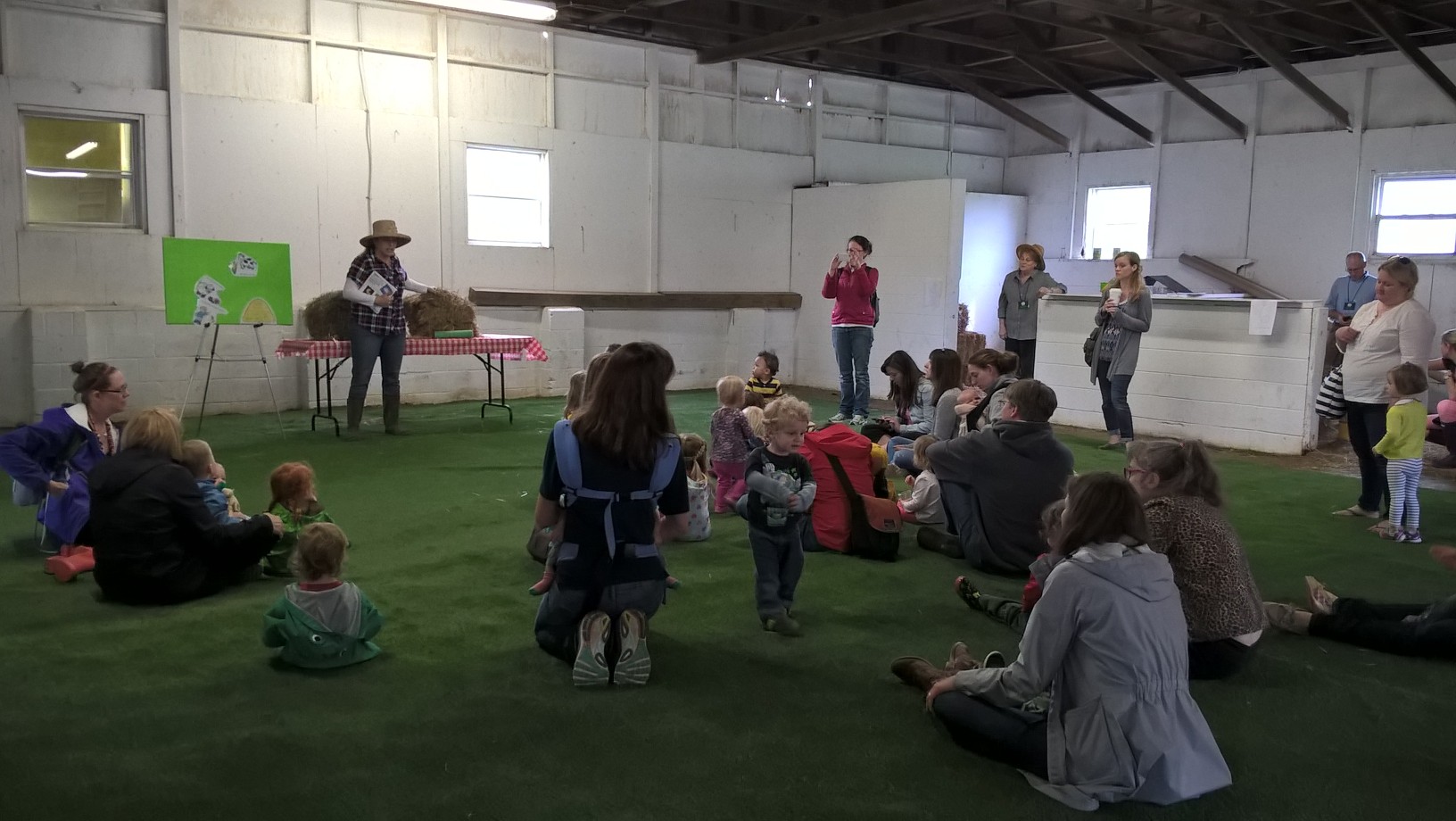
Thanks to a grant from the Maryland Soybean Board’s Green Events Program, the soy lawn product known as Syntipede 354 from a company called SYNLawn, was installed March 31.
Synthetic lawn products like Syntipede and AstroTurf represent a growing market for soybean oil, which is used to create a backing that locks the synthetic grass fibers in place. In 2015, AstroTurf was installed on 300 athletic fields across the U.S. It takes the soybean oil from approximately five acres of soybeans to produce the backing for a typical field. In Maryland, farmers grow about a half a million acres of soybeans, producing more than 20 million bushels of beans each year.
“Soy-based products often provide superior quality and performance than petroleum-based products and they support our family farmers,” says William Layton, chairman of the Maryland Soybean Board. “Through a variety of research and promotion programs, the soybean checkoff has fostered the creation of hundreds of soy-based products over the last two decades.”
Soybean oil displaces about 60 percent of the petroleum-based polyurethane in BioCel, the backing material used by SYNLawn, according to Underwriters Laboratories certification.
Soybeans offer an abundant, domestically produced and renewable supply of ingredients, offering companies the opportunity to reduce the petroleum content in commercial and industrial products. The soy checkoff partners with manufacturers to commercialize new soy-based products, giving farmers and others even more opportunities to buy products that contain U.S. soy. To find soy-based products, visithttp://www.soybiobased.org.
MSB’s Green Events Program provides grants to agricultural fairs and expos through a competitive process which begins with a request for proposals in the fall. More information is available on the board’s website at https://www.mdsoy.com.
About Maryland Soybean Board: The Maryland Soybean Board administers soybean checkoff funds for soybean research, marketing and education programs in the state. One-half of the checkoff funds stay in Maryland for programs; the other half is sent to the United Soybean Board. To learn more about the Maryland Soybean Board, visit https://www.mdsoy.com.
Maryland Soybean Board Wins Maryland Cattlemen’s Association Award
Hagerstown, MD. (March 29, 2016) – The Maryland Soybean Board received the Top Hand Award from the Maryland Cattlemen’s Association during its annual convention earlier this month.
The Top Hand Award recognizes an individual or organization that has contributed significantly to the benefit of the Maryland cattle industry.
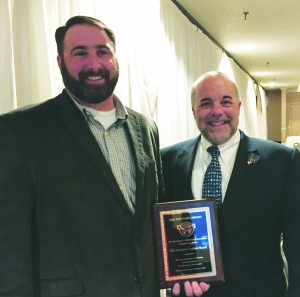
On behalf of the Maryland Soybean Board, Alan Hudson, a MSB director and a farmer from Berlin, Md., accepted the Top Hand Award from the Maryland Cattlemen’s Association’s director Dr. Scott Barao.
“The Maryland Soybean Board is pleased to accept the 2016 Top Hand Award from the Maryland Cattlemen,” said Chairman William Layton. “Agriculture is Maryland’s top industry. We seek opportunities to work with our fellow farmers to build a stronger industry and celebrate the contributions of agriculture toward Maryland’s environment, economy and quality of life.”
Livestock and poultry consume more than 98 percent of domestic soybean meal. The soybean board supports those industries with programs that include opportunities for farmers to train as spokespeople on behalf of agriculture. One part of this program, CommonGround, supports farm women reaching out to their non-farming peers.
The Maryland Soybean Board:
- Shares both an environmental audit and economic analysis of animal agriculture produced by the United Soybean Board and customized to each state.
- Sponsors the annual cattlemen’s Youth Skill-A-Thon and youth livestock shows in Central and Southern Maryland.
- Launched the consumer outreach campaign, “My Maryland Farmers,” at the 2015 Maryland State Fair, featuring local farmers and facts about their farms and Maryland agriculture.
This year, the soybean board funded more than $228,000 in research projects. It also promotes the use of soy-based products through an annual competitive grant program to county fairs and agricultural expos.
Ten Maryland farmer-directors lead the Maryland Soybean Board: William Layton of Vienna, chairman; Travis Hutchison of Cordova, vice chairman; Danny Saathoff of Denton, treasurer; Alan Hudson of Berlin; Randy Stabler of Brookeville; Linda Burrier of Union Bridge; Josh Appenzeller of Millington; Bill Langenfelder of Worton; Jeffrey Griffith of Lothian; and Brian Johnson of Westover.
About Maryland Soybean Board: The Maryland Soybean Board administers soybeancheckoff funds for soybean research, marketing and education programs in the state. One-half of the checkoff funds stay in Maryland for programs; the other half is sent to the United Soybean Board. To learn more about the Maryland Soybean Board, visit www.mdsoy.com.
# # #
For More Information:
Sandra Davis, Executive Director
Office: 410.742.9500
sdavis26@verizon.net
Maryland Farmers Are Breaking Records
Cover Crop Program Sees Best Participation Yet

“What we’re doing is an aerial application of cover crops,” explains Hans Schmidt, on a sunny day last fall. “Applying the cover crop seeds while the original crop is still in the field allows us to take advantage of seed mixes that produce dual results for soil health.”
Schmidt Farms is one of many Maryland farms which together seeded a record 492,244 acres of cover crops last fall, the Maryland Department of Agriculture has announced. Maryland farmers have exceeded the Watershed Implementation Plan milestone goals in 2011, 2013 and 2015 for cover crops and are on track to exceed the next two year milestone in 2017 with this new record enrollment acreage.
Cover crops are widely recognized as one of the most cost-effective and environmentally sustainable ways for farmers to meet nutrient and sediment reduction targets outlined in Maryland’s Watershed Implementation Plan to protect and restore the Chesapeake Bay by 2025.
“Maryland farmers believe in the environmental and agronomic benefits of planting cover crops on their fields to improve the soil, recycle unused plant nutrients, control erosion, and protect local waterways,” said Maryland Secretary of Agriculture Joe Bartenfelder. “This is the sixth consecutive year that farmers have planted more than 400,000 acres of cover crops on their fields.”
Schmidt Farms is a third generation family farm, operated by Hans and his wife, Jennie, and Hans’ brother, Alan and his wife Brenda. The farm cultivates about 2,000 acres of food and feed – high oleic soybeans used to create soybean oil, soybeans used in tofu and soy milk, green beans, tomatoes and wine grapes. In addition, they grow soy, corn and barley for animal feed.
Using a cover crop application program allows the farm to feed nutrients into the top soil, and at the same time improve the fields’ soil tilth.
“Tilth is the physical condition of the soil that allows for a healthy root system to support plant growth and plant health,” says Jennie. “Having soil with good tilth means that the soil has large pore spaces for oxygenation and water filtration. This all adds up to a better no-till program in the spring and a reduced use of fertilizer.”
The cover crop program is not a new idea on the farm. In fact, Walter Schmidt was one of the first farmers in the country to implement cover crops, way back in the late 1960s.
“Dad wanted to ensure that the next generation of our family had healthy soils to continue our family farming legacy,” says Hans. “He certainly was able to meet that goal, and Alan and I continue the practice of constantly improving our soils.”
The Schmidt family goes out of its way to promote environmental stewardship and leadership for agriculture in Maryland. The farm has earned a designation of Certified Agricultural Conservation Steward under the Farm Stewardship Certification and Assessment Program (FSCAP), and Hans, who recently “retired” as volunteer chairman of the Maryland Soybean Board and from the Maryland Association of Soil Conservation Districts, has been appointed Assistant Secretary of Resource Conservation at the Maryland Department of Agriculture. Jennie is now president of the Maryland Grain Producers Utilization Board.
“It’s rewarding to grow food for our neighbors, and the larger community,” says Hans. “We all have an influence on the environment. As farmers, we put the safety and health of the environment first. We are not the only farmers doing this, for most, it’s second nature.”
The Maryland Soybean Board and United Soybean Board are funded by the national soybean checkoff. Through the checkoff program, farmers contribute one-half of one percent of the net market value of soybeans at the first point of sale. These funds are used for research, marketing and education projects. To learn more, visit www.www.mdsoy.com.
Archives
No Results Found
The page you requested could not be found. Try refining your search, or use the navigation above to locate the post.