
Maryland Soybean Board Seeks Changes to Improve Road Safety
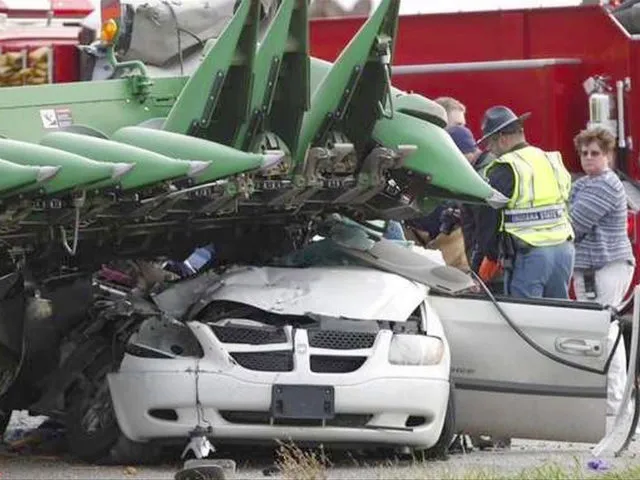 Auto crashes involving farm vehicles or equipment can be costly both in terms of property damage and injuries, and in some circumstances, result in fatalities. The Maryland Soybean Board (MSB) wants to minimize these occurrences.
“We’ve had many farmers report of incidents where they had to drive off the road to avoid a vehicle trying to unsafely pass them with oncoming traffic headed their way,” commented Travis Hutchison, Chairman of the Maryland Soybean Board. “Farm vehicles and equipment must travel public roads in order to reach outlying fields and to transport products to market or processing facilities. We want to improve safety on rural roads for our farmers and our neighbors in the community.”
MSB conducted a study to research the prevalence of farm equipment related accidents and investigate potential solutions. Hutchison announced the release of the Maryland Rural Road Safety Study at the Maryland Commodity Classic on July 25.
Study Results
Findings showed that the majority (<70%) of farm vehicle crashes (FVCs) were listed as property damage crashes, while roughly 28% were injury crashes and slightly less than 2% of FVCs were fatal crashes. The most common result of FVCs was contact between two moving vehicles. Most FVCs were rear-end accidents or single vehicle incidents.
The number of FVCs are growing every year. They most frequently occur June through October. Over 75% of FVCs occurred during daylight hours, with only 16.5% occurring in the dark. Fewer than 10% of FVCs took place during dawn or dusk light conditions. Over 72% of FVCs occurred in clear weather, while 9% occurred during cloudy conditions and 9% in precipitation (rain, sleet, or snow).
Most FVCs occur on two-way undivided roads (52.8%), followed by two-way divided highways with barriers or medians (21.9%). The largest number of incidents occurred on state highways (38%), followed closely by county roads (30%).
Recommended Actions
“Education for farmers to know how to best prevent accidents is one of our recommendations, as this will be a continuing issue with Maryland’s population growth,” continued Hutchison. “It’s also imperative the that non-farming public understand how to safely travel roads where farm equipment is present.”
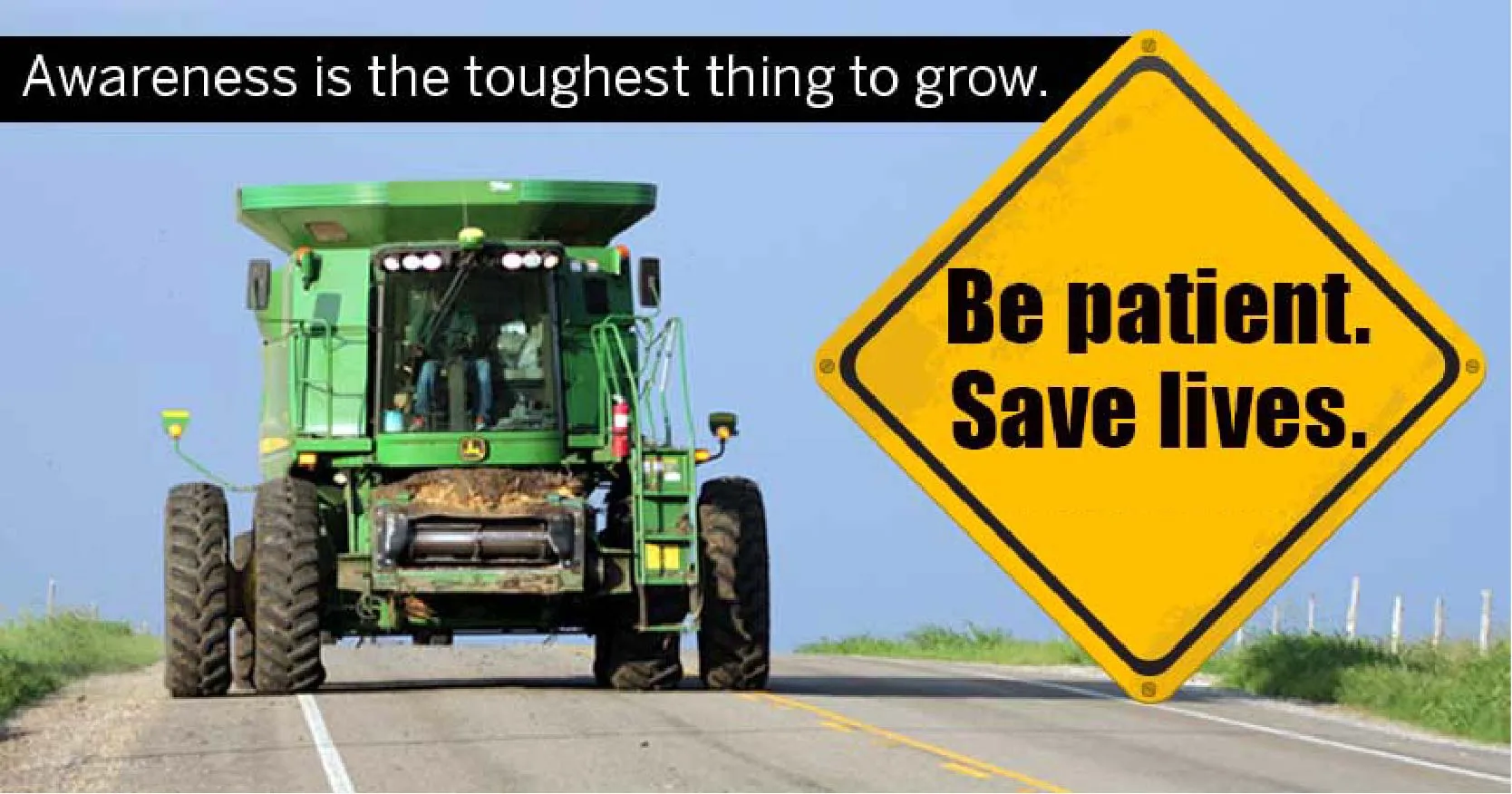
Recommendations for public programming, inclusion of farm vehicle safety in driver’s education training, and education campaigns targeted to spring planting and fall harvest are several ways identified to improve the public’s understanding of rural road safety.
Studies of road characteristics found that FVCs are more likely to occur on roads with speed limits over 50 mph, curves, high traffic density, and/or smaller lanes/road widths. The report identifies how roadway design, maintenance and improvement efforts can attempt to mitigate these problems. Recognizing farm vehicles in the state Strategic Highway Safety Plan would help bring awareness to the unique needs of operating farm equipment and reduce injuries on Maryland roadways.
In the spring, the Maryland Farm Bureau, Maryland Department of Agriculture and Maryland State Highway Administration worked on posting road signs that warn of tractors and slow-moving farm equipment. This is a beneficial strategy that MSB would like to see expanded, particularly during spring tillage and fall harvest when agricultural traffic is greater and near locations such as rural storage facilities or markets.
“We commend the efforts underway and invite more partners to help in the effort to lower the accident rate on Maryland roads,” Hutchison concluded.
The Maryland Rural Roads Safety Study is available at www.mdsoy.com/md-rural-road-safety-study/.
Maryland farmers plant about 500,000 acres of soybeans each year, and the crop generates approximately $200 million in value to the state.

The Maryland Soybean Board is funded by the national soybean checkoff program, which assesses one-half of one percent of the net market value of soybeans at the first point of sale. The board consists of ten volunteer farmer-directors and directs funds for research, marketing and education programs to benefit the Maryland soybean industry.
# # #
For More Information:
Susanne Zilberfarb, Executive Director
Maryland Soybean Board
Office: 410.430.2613
Maryland Soybean Board Seeks Executive Director Applicants
The Maryland Soybean Board is accepting applications from experienced, reliable and task-oriented individuals for the position of Executive Director. The ideal candidate will be familiar with Maryland agriculture, highly self-motivated, professional, and capable of prioritizing tasks and building strategic partnerships.
The Executive Director serves the board and will be responsible for performing a number of administrative and leadership duties in support of the board’s mission. These include facilitating with the Board the planning, evaluation, coordination, and implementation of informational, promotional, and educational programs to benefit Maryland soybean farmers; contracting, Board and organizational relations, and building grower opportunities for profit through promotion, research and educational activities; developing an annual budget and projects with goals and being accountable for activities of the checkoff program; and maintaining the records of the board as described in the bylaws and policy handbook.
“The Maryland Soybean Board conducts a robust set of research, marketing and education projects that support the interests of Maryland soybean farmers,” says Travis Hutchison, MSB Chairman, who is a soybean farmer from Cordova, Md. “Our vision is to be a leader in Maryland agriculture by investing soybean checkoff dollars to improve production, the operating environment and the market.”
Applicants should submit a cover letter, resume and the names and contact information of three references by Aug. 20, 2109, to Hutchison at hutchisonbrothers@hotmail.com. Questions may be directed to him at (410) 924-3008. Information about the board’s work may be found at www.mdsoy.org. This is a part-time, contractual position which does not offer benefits.
Maryland farmers plant about 500,000 acres of soybeans each year, and the crop generates approximately $200 million in value to the state.
The Maryland Soybean Board is funded by the national soybean checkoff program, which assesses one-half of one percent of the net market value of soybeans at the first point of sale. The board consists of ten volunteer farmer-directors and directs funds for research, marketing and education programs to benefit the Maryland soybean industry.
MSB encourages Farmers to Win the War on Weeds with Workshop and Farm Tools
As weeds take a greater toll on crop yields, the Maryland Soybean Board (MSB) is encouraging Mid-Atlantic farmers to take action to prevent the spread of herbicide resistant weeds.
“If weeds are identified in their earliest stages, we can make a plan to control them before they overtake a field,” stated Brian Johnson, chair of the MSB Research Committee. “We are investing in research to assist farmers in combating the issue and improving yields on the farm, and then relaying that information to the farmer.”
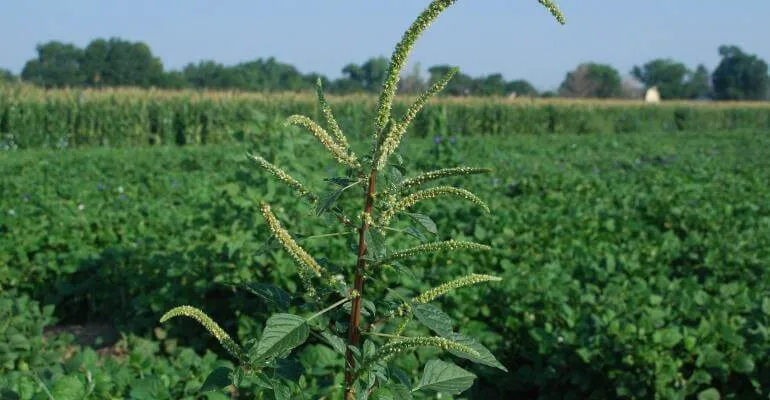
Weed control is a top priority for the soybean board, as it impacts the health of the soil as well as crop yields. The soybean growers now offer a herbicide lookup app that farmers can use to identify weeds in the field. This is available at www.iwilltakeaction.com, along with additional tools in weed management.
MSB has teamed up with the University of Maryland Extension to offer workshops for farmers interested in learning about herbicide resistant weeds and improve weed control on their farms. As the spread of these weeds continue in the Mid-Atlantic, it is imperative for landowners to learn management strategies that will help control the weeds.
Herbicide Weed Management Workshops run 8:00 am to 1:00 pm and will cover integrated weed management tactics; Palmer amaranth, common ragweed and marestail control strategies; and developing a weed management plan. There is no charge to attend and lunch will be provided. Pesticide (commercial and private) and CCA continuing education credits will be offered. Farmers are requested to RSVP to provide an accurate meal count.
• February 26: St. Mary’s County UME Office, 26737 Radio Station Way, Leonardtown. Call St. Mary’s County UME Office, 301-475-4484.
• March 4: Harrington Volunteer Fire Company, 20 Clark St, Harrington. Call UD Carvel REC, 302-856-2585 (ext 540).
• March 5: Somerset Extension Office, 30730 Park Drive, Princess Anne. Call Somerset County UME Office, 410-651-1350.
• March 6: Frederick County UME Office, 330 Montevue Lane, Frederick. Call Frederick County UME Office, 301-600-3576.
• March 7: Chestertown Volunteer Fire Company, 211 Maple Ave, Chestertown. Call Kent County UME Office, 410-778-1661.
For more workshop information, contact Ben Beale at 301-475-4481, Michael Flessner at 540-315-2954, Matt Morris at 301-600-3578 or Mark VanGessel at 302-856-7303.
19 Farmer-Leaders Appointed to United Soybean Board
Maryland’s Belinda Burrier was one of 12 returning directors sworn in to the United Soybean Board at its annual meeting Dec. 6 in St. Louis.
A total of 19 farmer-directors were appointed by U.S. Agriculture Secretary Sonny Perdue. Burrier, of Union Bridge, and William Layton of Vienna represent Maryland on the United Soybean Board.
The volunteer farmer-leaders of USB direct soybean checkoff funds to research, marketing and promotion efforts that maximize profit opportunities for all U.S. soybean farmers. To increase the value of U.S. soy, the checkoff works with partners in the value chain to identify and capture opportunities in areas where U.S. soybean farmers can most effectively differentiate their product: meal, oil and sustainability.
“The largest customers of U.S. soy are demanding more value within the bean itself,” says John Motter, USB chair and soybean farmer from Jenera, Ohio. “The expertise and vision of these farmer-leaders will challenge us to look at innovations beyond just growing more bushels to meet the needs of our customers around the world and boost the profit potential of U.S. soybean farmers.”
USB’s 73 farmer-directors work on behalf of all U.S. soybean farmers to achieve maximum value for their soy checkoff investments. These volunteers invest and leverage checkoff funds in programs and partnerships to drive soybean innovation beyond the bushel and increase preference for U.S. soy. That preference is based on U.S. soybean meal and oil quality and the sustainability of U.S. soybean farmers. As stipulated in the federal Soybean Promotion, Research and Consumer Information Act, the USDA Agricultural Marketing Service has oversight responsibilities for USB and the soy checkoff.
Archives
No Results Found
The page you requested could not be found. Try refining your search, or use the navigation above to locate the post.