
Maryland Soybean Board Accepting Proposals for Promotions
The Maryland Soybean Board is seeking proposals for projects that promote soybeans or their many by-products. Interested applicants should submit their proposals by July 15.
Projects should be for their upcoming fiscal year, beginning October 1, 2022, and should focus on soybean use and promotion. Priority areas identified by the Maryland Soybean Board include animal agriculture, consumer education, emerging markets, and farmer engagement, however potential projects are not limited to these topics.
“While farmers are facing record-high input prices, we are eager to bring new opportunities to Maryland soybean growers,” says Evan Staley, chair of the board’s Promotion and Communications Committee. “Through these projects, we strive to put more money back in farmer’s pockets.”
Applications will be reviewed by the farmer-led board and will be selected based on the greatest benefit to Maryland’s soybean industry. Applications can be found here (Word) (PDF).
About Maryland Soybean Board: The Maryland Soybean Board is funded by the national soybean checkoff program, which assesses one-half of one percent of the net market value of soybeans at the first point of sale. The board consists of ten volunteer farmer-directors and directs funds for research, marketing and education programs to benefit the Maryland soybean industry.
###
For information, contact:
Danielle Bauer Farace
Maryland Soybean Board
Executive Director
443-812-4526
danielle@mdsoy.com
Soy Checkoff Builds Value for Maryland Soybean Farmers
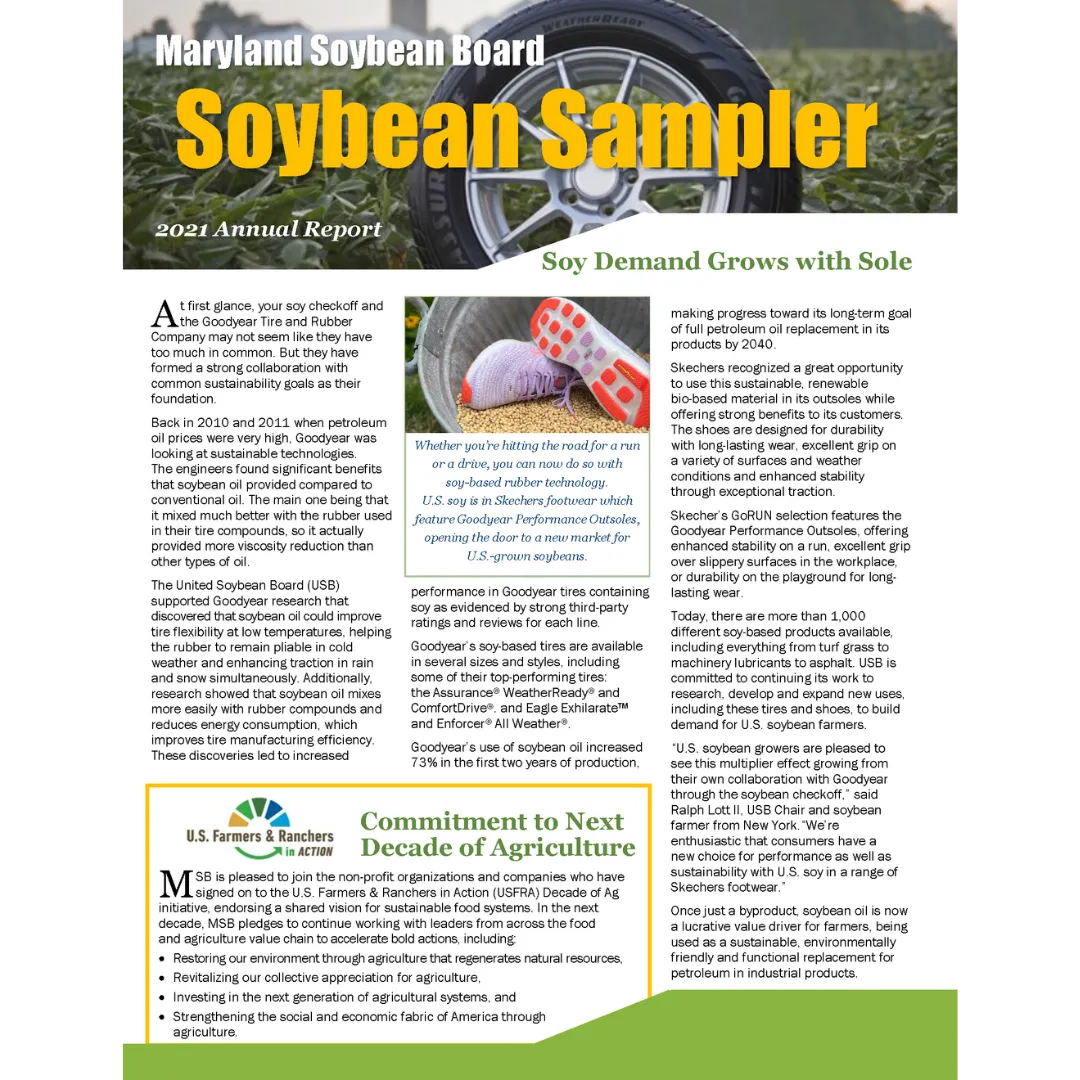
“For every dollar that is invested in the soy checkoff, farmers received $12.34 in added value,” explains MSB Chair Joshua Appenzeller. “We prioritize our investments in projects that address local issues and positively impact farmer’s operations.”
Highlights include projects to promote rural road safety by utilizing their Find Me Driving resources; build consumer trust through projects such as My Maryland Farmers and CommonGround; leadership training for farmers to benefit their communities; and a research field day that allowed growers the opportunity to learn about how checkoff funded research can be applied on their farms.
More information about these projects can be found in the Annual Report.
Administered by MSB, the checkoff is a 100% farmer-funded program that invests in research, marketing, and education to maximize the profitability of Maryland soybean producers. MSB’s Board of Directors is made up of ten volunteer soybean farmers, each appointed for a three-year term, along with ex-officio members representing agribusiness, the Maryland Department of Agriculture, and the University of Maryland.
In Maryland, farmers grow about a half a million acres of soybeans, producing more than 20 million bushels of beans each year. With a value of $173 million to the state’s economy, soybeans are one of Maryland’s top crops. The checkoff program is funded by farmers through an assessment of one-half of one percent of the net market value of their soybeans at the first point of sale. One-half of the checkoff funds stay in Maryland for programs; the other half is sent to the United Soybean Board.
For more information on the Maryland Soybean Board, explore www.mdsoy.com.
# # #
Danielle Bauer Farace, Executive Director
Maryland Soybean Board
Office: 443.812.4526
danielle@mdsoy.com
Safety First is Family First
Seven Steps to Reduce Stress on the Farm
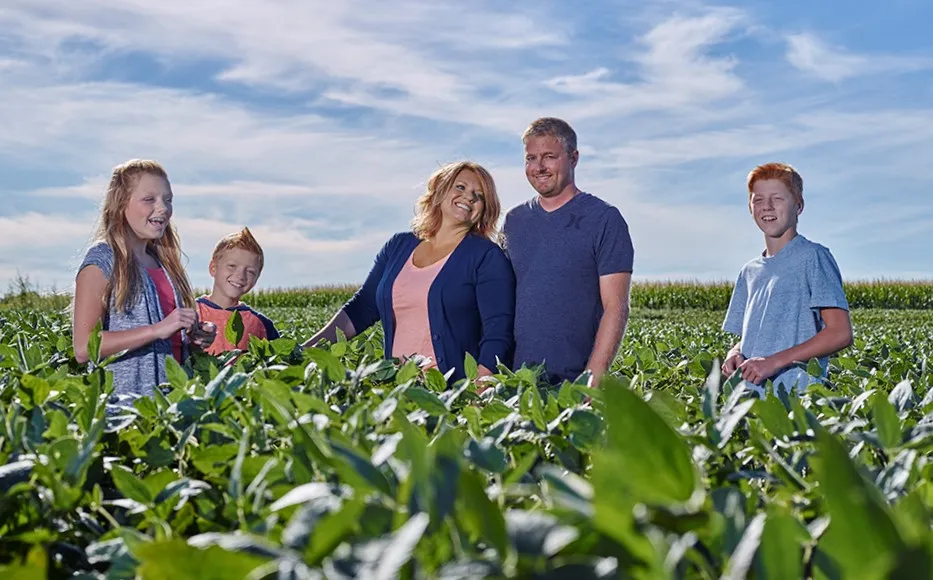
“The topic of farm stress management and farm resiliency has gained interest in the last 18 months,” stated Shannon Dill, Extension Educator with the University of Maryland. “Whether the pandemic, markets, health care or media have increased the conversation, it is an important one to have.”
Extension programs have been stepping to the plate to help farmers. Dill is a member of an expert team of extension educators who, with the support from a NorthEast SARE grant and a partnership with USDA NIFA and Maryland Department of Agriculture, have created and expanded resource tools for managing farm stress.
While ordinary stress occurs on a regular basis, sustained distress over longer periods of time can cause safety risks for you and those around you. On the farm sustained distress can affect a person’s ability to cope, make sound decisions, and adopt new practices associated with their health, finances, regulatory, and production practices.
As spring arrives there is much to do around the farm – cleaning up from winter, preparing for planting season and timing everything just right to avoid the late frost or spring thunderstorm. It is easy to put health care and personal wellness on hold, but they should also be part of the preparations for the growing season.
Here are seven ideas to manage stress on the farm Dill recommends:
- Have a plan and get organized
Gather your team of family members and employees to develop a plan for activities and responsibilities. Writing out the to-do list, timeline and who is responsible will help prioritize and delegate tasks.
- Try to get a good night’s sleep
It can be difficult to sleep well during stressful times, but sufficient rest is key to staying healthy. Have a night-time routine in place and reduce the use of electronics.
- Build your support team and communicate
We all need help sometimes. Develop a team of experts, advisors, friends and family that can support you and your farming operation. And know when to ask for help. Keep communication lines open and be honest about your struggles and be willing to listen to others’ concerns.
- Watch your diet and nutrition
Stress eating or not eating can be tempting in times like this. A balance of fruits, vegetables, and proteins will help your body and mind stay healthy. Increase your water intake and reduce processed and fast food.
- Limit alcohol and other drugs
Watch your intake of alcohol or other drugs, and discuss use with a doctor or mental health professional. There are a number of resources for farmers feeling overwhelmed or hopeless.
- Take a time out
It is hard to imagine taking time out of the day when there is so much to do but recharging is important. Perhaps it is engaging in prayer, meditation, or physical exercise for your mental, physical, and spiritual health. Just 10 or 15 minutes can help you feel refreshed and ready to focus again.
- Keep each other accountable
Talk with friends and family regularly to hold each other accountable to healthy habits. It is ok to ask, “Are you ok?”, “Are you sleeping alright?”, or “Have you eaten today?”
Multiple resources are available as the importance of stress management has grown. A national database of resources is available at https://soygrowers.com/soyhelp-national-resources-info/. Promoting safety efforts such as these have been made available to farmers by the soy checkoff.
More resources are available on Farm Stress Management at www.go.umd.edu/farmfamily. Choose from Financial Resources, Stress Management, or Legal Resources to find a variety of online information, guides, and tools developed to help in each of these areas.
Also, UM Extension and the University of Delaware Extension worked together to develop their publication Farm and Farm Family Risk and Resilience Guide to Extension Educational Programming. UDE offers further resources at https://www.udel.edu/academics/colleges/canr/cooperative-extension/nutrition-wellness/got-your-back/.
The goal of all these efforts is to raise awareness, provide training and build educational resources for communities struggling with mental and behavioral health challenges.
Road Safety Campaign Aims to Keep Farmers Safe
Creative tools available to help farmers and farm-employees take to the road safely.
Aiding U.S. farmers in getting home safely to their families every night is a priority for your soy checkoff. While farming may be one of the most rewarding occupations, it’s also one of the most dangerous. With the support of the United Soybean Board and the Delaware Soybean Board, the Maryland Soybean Board developed the Find Me Driving “Road Safety” campaign, aimed to raise motorists’ awareness of farm equipment drivers on the roads during the spring, summer and fall. The campaign also offers farmers tools for best practices in driving slow moving vehicles (SMVs) on roadways. Through the campaign, various resources — such as training videos, safety posters and window clings for your tractor and combine — were developed to help keep farmers and others safe on the road.
“Farmers driving SMVs can do so much to raise awareness of their presence on the road to other faster-moving vehicles,” said Belinda Burrier, Chair of the United Soybean Board Communication and Education Committee and Maryland farmer. “It comes down to operational best practices when moving farm equipment from one location to another, and each farm equipment driver should follow the safety tips available from this campaign to help ensure their safety and the safety of others.”
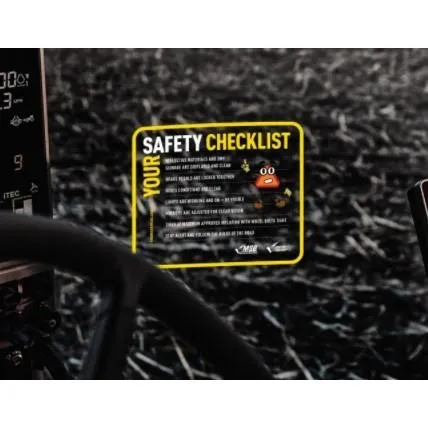
- Reflective materials and SMV emblem are displayed and clean.
- Brake pedals are locked together for even stops.
- Required lights and warning flashers are on; turn off rear facing work lights.
- Mirrors are clean and adjusted for clear views.
- Tires are at the maximum recommended pressure and wheel bolts are tight.
- Route conditions are clear of road construction, bad weather and accidents.
“We encourage all farm organizations to promote the road safety campaign tools with their farmers and share the road safety information with their non-farming neighbors driving the same rural roads with our farm equipment,” concluded Burrier.
The Find Me Driving campaign website has a collection of safety-related resources for general motorists and SMV drivers including checklists, training videos, driving statistics and tips, and safety articles.
# # #
About Maryland Soybean Board: In Maryland, farmers grow about 500,000 acres of soybeans, producing more than 20 million bushels of beans each year. With a value of $173 million to the state’s economy, soybeans are one of Maryland’s top crops. The checkoff program is funded by farmers through an assessment of 0.5% of 1% of the net market value of their soybeans at the first point of sale. One-half of the checkoff funds stay in Maryland for programs; the other half is sent to the United Soybean Board. See more at www.mdsoy.com.
About United Soybean Board: United Soybean Board’s 78 volunteer farmer-directors work on behalf of all U.S. soybean farmers to achieve maximum value for their soy checkoff investments. These volunteers invest and leverage checkoff funds in programs and partnerships to drive soybean innovation beyond the bushel and increase preference for U.S. Soy. That preference is based on U.S. soybean meal and oil quality and the sustainability of U.S. soybean farmers. As stipulated in the federal Soybean Promotion, Research and Consumer Information Act, the USDA Agricultural Marketing Service has oversight responsibilities for USB and the soy checkoff. For more information on the United Soybean Board, visit www.unitedsoybean.org.
Archives
New Officers and Executive Assume Duties for Maryland Soybean Board
(SALISBURY, MARYLAND) – Brian Johnson of Westover has been elected Chair of the Maryland Soybean Board. Johnson succeeds Travis Hutchison of Cordova, who reached the term limit for chair, but remains on the board to complete his director’s term. Linda Burrier of Union...
Maryland Soybean Board Designates New Executive Director
The Maryland Soybean Board (MSB) is pleased to announce the selection of Danielle Bauer as the newly appointed Executive Director. “Danielle has established a good working relationship with farmers and stakeholders across Maryland,” stated Travis Hutchison, MSB...
Maryland Soybean Board Seeks Research Proposals
(SALISBURY, MARYLAND) – September 10, 2019 – Soybean researchers seeking funding from the Maryland Soybean Board for new soybean research projects to be conducted during the 2020 growing season are asked to submit a “pre-proposal” by Oct. 15. “The pre-proposal process...
Maryland Soybean Board Seeks Changes to Improve Road Safety
Auto crashes involving farm vehicles or equipment can be costly both in terms of property damage and injuries, and in some circumstances, result in fatalities. The Maryland Soybean Board (MSB) wants to minimize these occurrences. “We’ve had many farmers report of...
Maryland Soybean Board Seeks Executive Director Applicants
The Maryland Soybean Board is accepting applications from experienced, reliable and task-oriented individuals for the position of Executive Director. The ideal candidate will be familiar with Maryland agriculture, highly self-motivated, professional, and capable of...
MSB encourages Farmers to Win the War on Weeds with Workshop and Farm Tools
As weeds take a greater toll on crop yields, the Maryland Soybean Board (MSB) is encouraging Mid-Atlantic farmers to take action to prevent the spread of herbicide resistant weeds. “If weeds are identified in their earliest stages, we can make a plan to control them...
19 Farmer-Leaders Appointed to United Soybean Board
Maryland’s Belinda Burrier was one of 12 returning directors sworn in to the United Soybean Board at its annual meeting Dec. 6 in St. Louis. A total of 19 farmer-directors were appointed by U.S. Agriculture Secretary Sonny Perdue. Burrier, of Union Bridge, and William...
Top Ways the Soybean Checkoff is Responding to the Tariff
China’s tariff on U.S. soybeans is a hot topic, and although the soybean checkoff program does not engage in policy work, it has been working to soften the blow.
Maryland Soybean Board Funds Soybean Research
Pest and disease management for soybeans is the focus for research projects funded by the Maryland Soybean Board for 2019. The board approved 16 projects for funding, totaling $200,814 in checkoff dollars invested. The Maryland Soybean Board administers soybean...
Davis Retires From Maryland Soybean Board
(SALISBURY, MARYLAND) – July 27, 2017 – After nearly four decades of service to the Maryland Soybean Board, Sandy Davis is retiring effective Sept. 30. Davis, who began her career with the soybean board March 3, 1980, has been executive director of the board since...